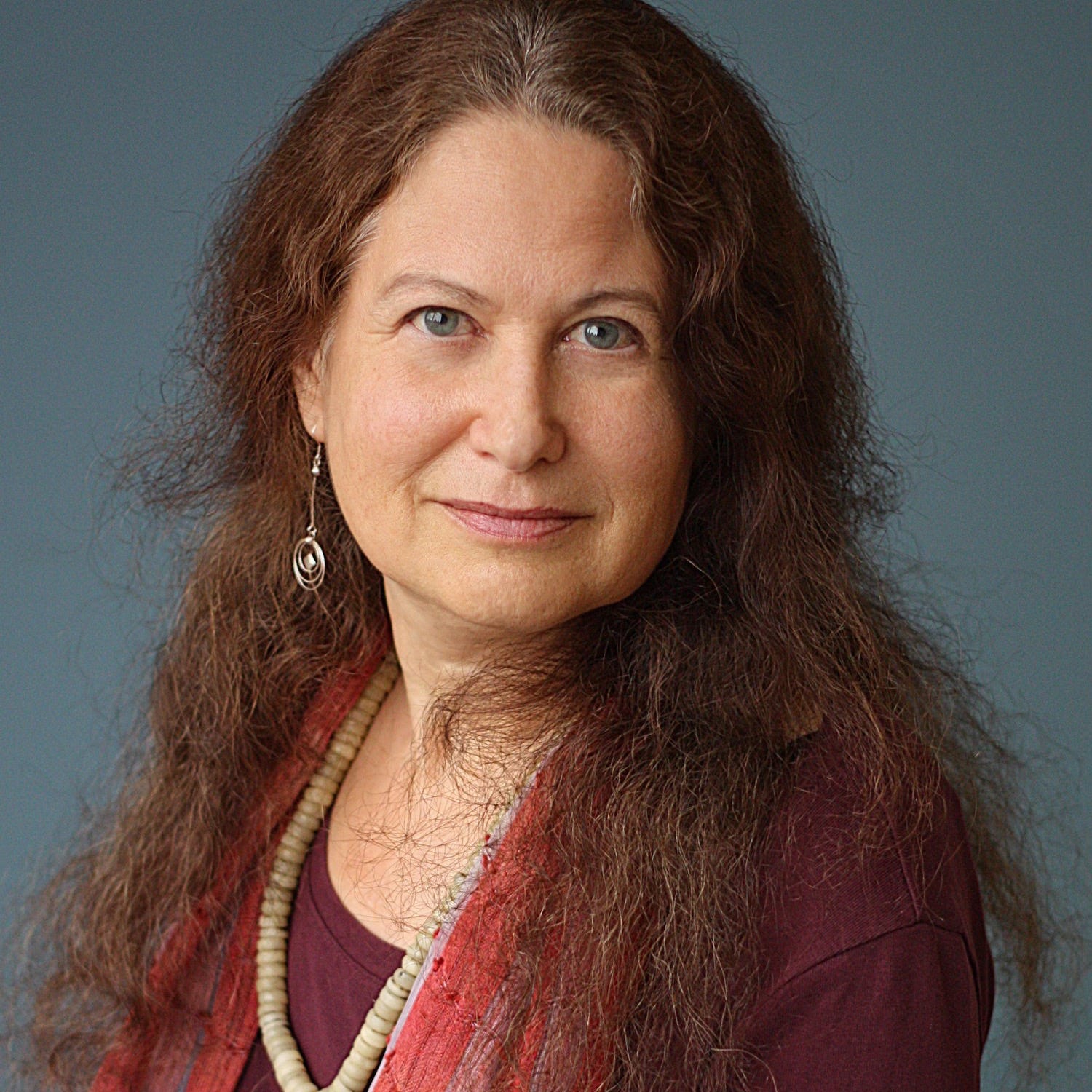
Jane Hirshfield’s first poem was published in The Nation in 1973, shortly after graduating from Princeton University as part of its first class to include freshman women. She then put aside her writing for nearly eight years to study at San Francisco Zen Center, included three years as a monastic at Tassajara Zen Mountain Center, the oldest Buddhist Soto Zen monastery in America.
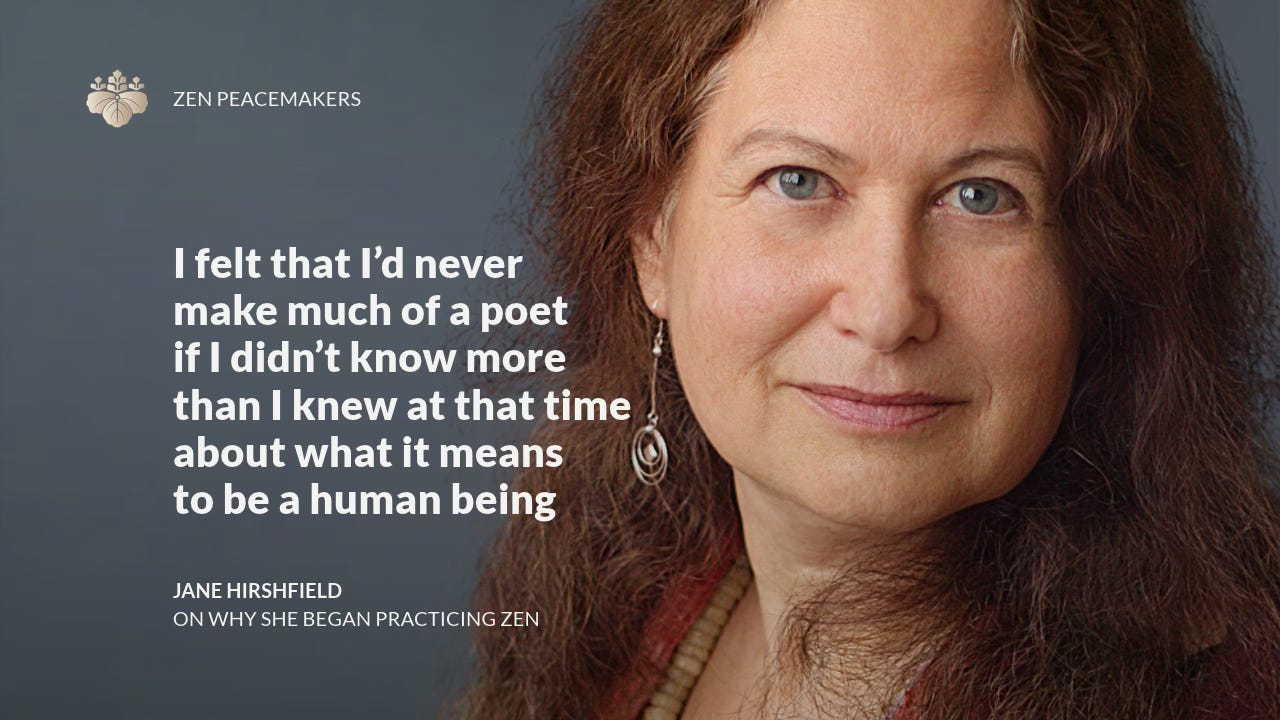
Of her decision to enter into Zen practice, Hirshfield once said “I felt that I’d never make much of a poet if I didn’t know more than I knew at that time about what it means to be a human being.”
She shared more about her deep relationship with meditation in Noelle Oxenhandler’s 2023 Lion’s Roar article The Zen of Jane Hirshfield:
I just wanted to sit zazen, to follow the schedule, to plumb the question that had drawn me to practice in the first place: What does it mean to lead a human life?
…There’s nowhere more peripheral than a zendo. You’re sitting in the semidarkness, facing a wall. The practice of Soto Zen is shikantaza, just sitting. And it’s wordless — no koans, no verbal noting. You’re present, attending with your whole body and mind. And gradually you become permeable. You feel no distinction between what’s inside and outside the skin, and that unboundaried awareness reaches out in all directions, to all beings.”
In reflecting on the difference between writing and meditating, she said,
Both involve an intense listening. But they are different forms of listening. It’s as though you’re a deep-dish telescope pointed in different directions.
In poetry, you move from listening into a collaboration with arriving language—its rhythms, images, and associations. I’ll often hear the music of a poem before I find the words. In meditation, you move from that listening into life. Your life, felt as inseparable from the world’s life, is the expression of your practice…
Nothing new comes if we remain in a fixed position.
In a 2006 interview on Zen and the Art of Poetry, she called her time in formal Zen training “the diamond at the center of my life. Whoever I now am came out of that experience.”
That said, Hirshfield prefers not to be labeled a Buddhist poet. “I am a human poet, that’s all,” she told Spirituality & Health in 2013.
“Labels just get in the way. The fundamental wildness and mystery of existence slip every leash we try to put on them, and both meditation practice and the writing of poems are leash-slipping acts.”
Join Zen Peacemakers this Tuesday, September 29th for a conversation with poet Jane Hirshfield