
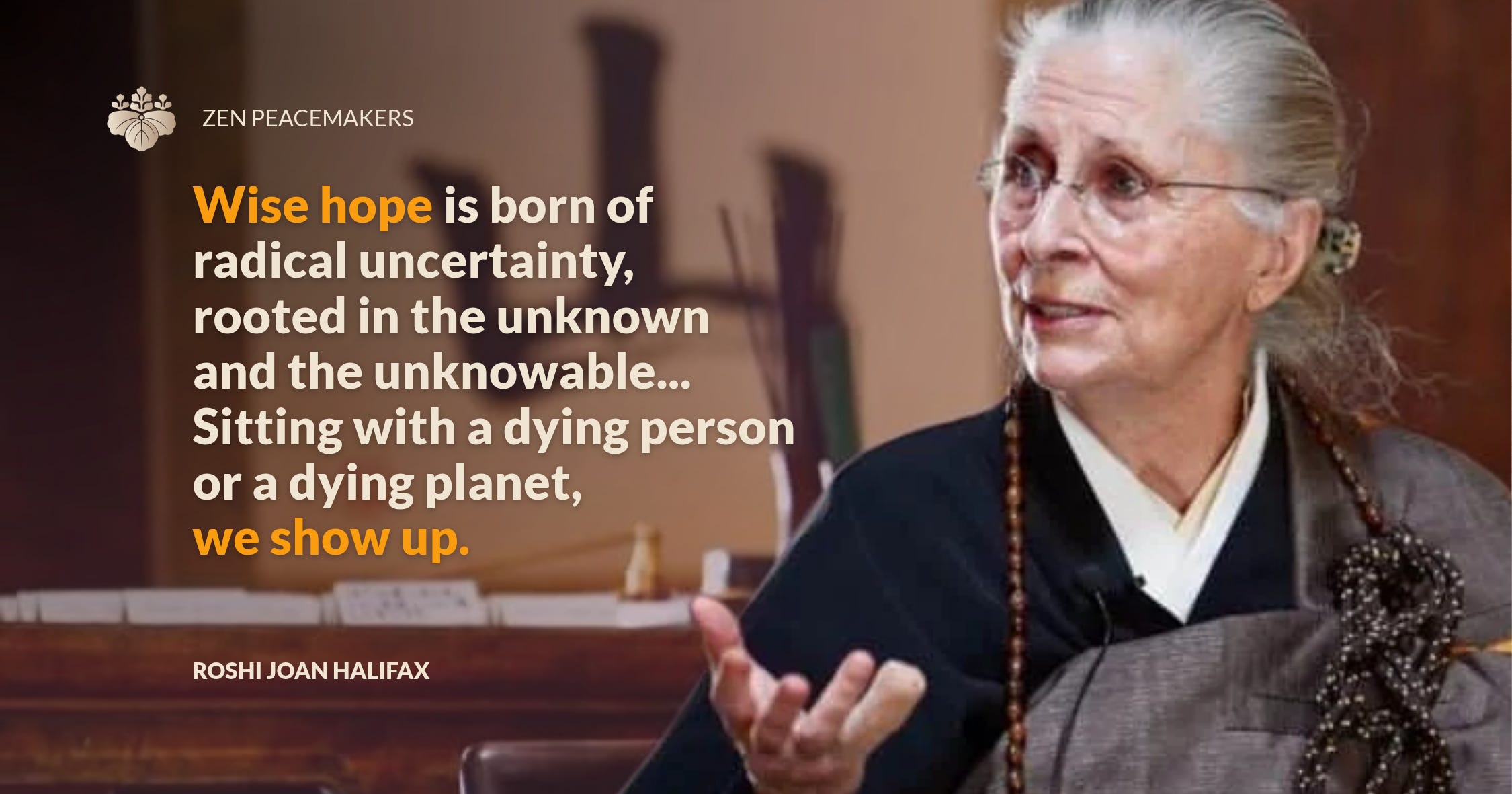
Roshi Joan Halifax has spent decades as a social activist and caregiver of dying people, and has volunteered with death row inmates, served in remote Himalayan medical clinics, and worked with Rohingya refugees fleeing genocide. She has dedicated her life to what might be seen as hopeless situations. As she writes in this Lion’s Roar article, “You might ask, why bother? Why hold out hope for ending war or injustice?”
Ordinary hope, she points out, clings to a particular outcome, and fear that it won’t happen is always underneath. Roshi Joan makes the case instead for “wise hope,” a hope that faces uncertainty and serves as the ground for compassionate action.
Drawing on Václav Havel, she distinguishes hope from optimism. As she writes, “Wise hope is not seeing things unrealistically but rather seeing things as they are, including the truth of suffering — both its existence and our capacity to transform it.”
For Roshi Joan, the fact that we don’t know how things will turn out is a source of possibility, not despair. What paralyzes us is believing we already know how things will end. Instead:
“It’s when we realize we don’t know what will happen that this kind of hope comes alive; in that spaciousness of uncertainty is the very space we need to act.”
This is hope without conditions, dedicated to relieving suffering even when results aren’t guaranteed. The practice is simply to show up again and again.
What we do matters.
“Wise hope is born of
radical uncertainty,
rooted in the unknown
and the unknowable…
Sitting with a dying person
or a dying planet,
we show up.”— Joan Halifax
Wise Hope in Social Engagement, Parts 1 & 2 (Upaya Zen Center, 2018–2019)
Read the full article in Lion’s Roar: Yes, We Can Have Hope.
Join Roshi Joan TODAY for a live discussion with Zen Peacemakers, Wednesday, Nov. 18 at 12pm EST.
Register for the link. All are welcome!
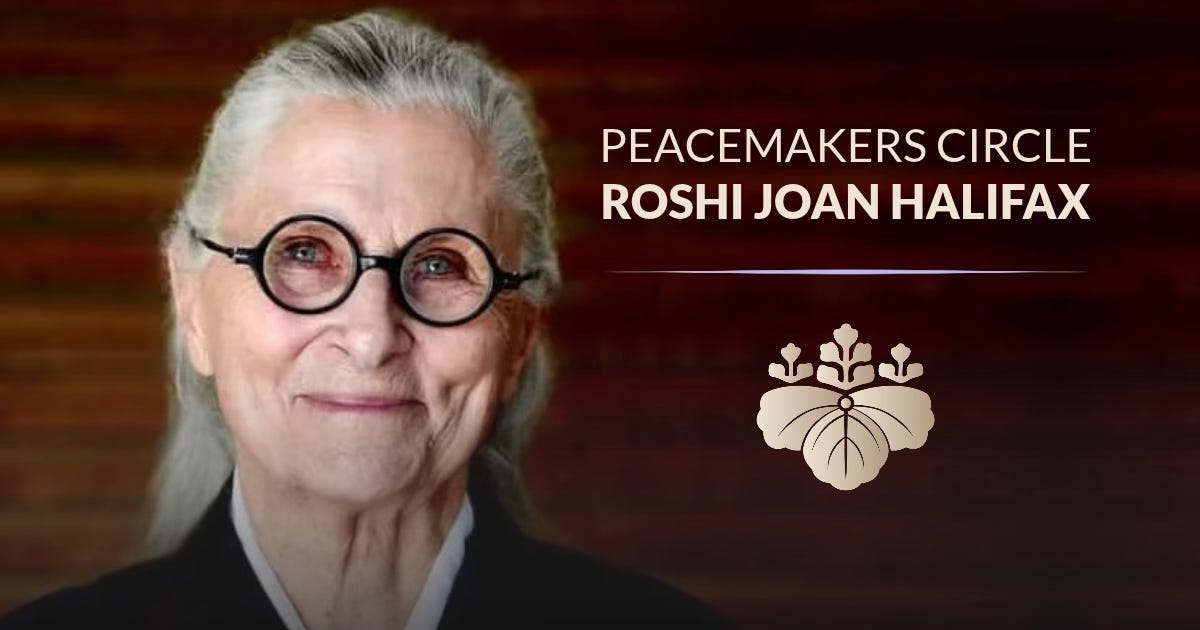
Unfinished Vow:
A Conversation with Roshi Joan Halifax
Join Roshi Joan Halifax and Zen Peacemakers for a conversation on “the architecture of goodness.” She will share perspectives on motivation, intention, commitment, atonement, and vows from her upcoming book Unfinished Vow, and how these principles can form the ground of a life oriented toward goodness.
Peacemakers Circle
Wednesday, November 18th, 2026
12:00pm - 1:30pm EST
Roshi Joan Halifax, Ph.D. is a Buddhist teacher, social activist, anthropologist, author, and Founder and Head Teacher of Upaya Zen Center. A successor of Bernie Glassman and Founding Teacher of the Zen Peacemaker Order, she is a pioneer in the field of end-of-life care. Her work and practice for more than three decades has focused on socially engaged Buddhism. For more about Roshi Joan’s life and work, please visit her website: joanhalifax.org.

Love this , thank you for sharing!