
While I was working there some years ago, you’d have a hard time finding my employer, a remote Alaskan gold mining and processing facility, on a map. Today you may still have to sort out some cartographic ambiguities when you look for it on Google Maps. It was, during my time there, one of the highest producing gold mines in North America, producing up to 1,200 ounces of milled and poured gold a day—and its remoteness, tucked in a steep, narrow valley north and east of the Alaska Range along with those cartographic ambiguities were its primary elements of security. An isolated facility housing up to 500 employees at any given time on rotations of two weeks on/one week off or four weeks on/two weeks off. I was employed there as a remote intensive care paramedic. During my rotations, I was it. I was the only emergency medical provider—with the nearest emergency room in Fairbanks over one hundred miles away via, for a good part of those miles, a long, one-lane gravel resource road or an irregularly accessible air strip. I was suited for the role. Before Alaska, as a paramedic in northern Minnesota, we’d often respond to 9-1-1 calls over forty miles away. I’d long ago let go of any sense of stressful urgency in my work and had become rather accepting to the simple realities of death and dying—and with that, of life.
Late one authentic interior Alaska summer afternoon, our radios crackled with frantic communication. One of our helicopters had gone down. The helicopters were used during the summer months to shuttle equipment and crews to and from the even more remote exploratory drilling sites across the region. The calls were coming from one of those crews who had witnessed the crash near a landing site on the ridgeline high above the main camp. There were no other helicopters on-site. There were no roads, not even trails, beyond the main camp.
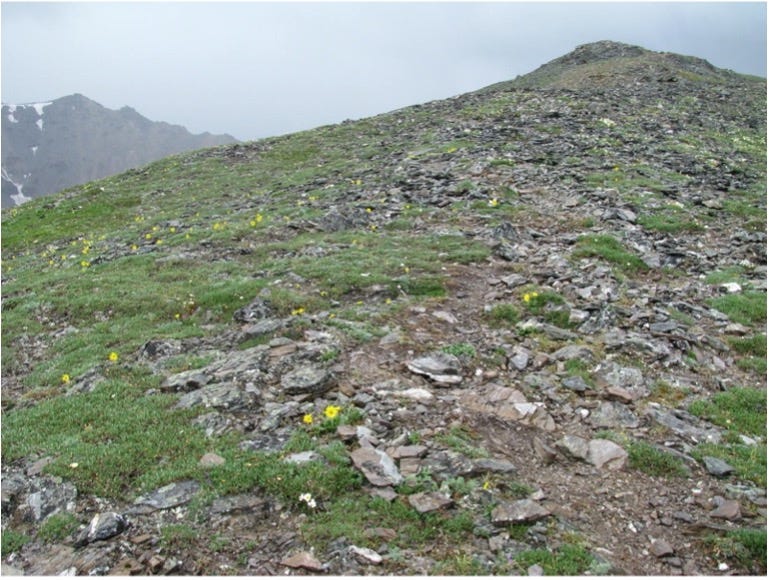
We gathered and shuttled personnel and gear up to the end of a tailings haul road. Fire and rescue teams made up of miners, millwrights, and other staff started up the steep, brush- and spruce-tangled slope on foot. Without bearings to an exact crash location, we spread out and followed the occasional shotgun blast from the crew at the scene—shotguns a necessity given the arctic grizzlies in the area. After twenty or thirty minutes, one of the responders radioed they were on scene. CPR in-progress. The rest of us followed their whistles and shouts to the scene.
I arrived with several others with some of the medical gear. The pilot had been pulled from the remnants of the helicopter by the crew he was picking up. Mangled wreckage was scattered through broken trees and brush. They had been doing CPR all that time. Given the extent of the trauma, I knew there was little we could do—but we did it anyway. I felt and listened for any signs of cardiac activity—the cardiac monitor lagging behind with whoever was carrying it up. There were none. I intubated and started an I.V. and rotated responders in and out of the CPR cycles—most of whom I had taught basic life support skills at the mine. A few rounds of I.V. epinephrine, a medication that can enhance CPR and, in some cases, prompt electrical activity in the heart. After some time, I called it. We stopped.
Without the focus and immediacy of the emergency care we’d been administering, a silence set in. The responders, now numbering more than twenty, awkwardly gathered themselves. The stillness, after what we’d been doing the last forty-five minutes or more, was both pensive and overwhelming. Bird song—a series of two slow, widely-spaces ethereal multi-tonal notes, came from the denser spruce below us. Varied Thrush, I thought to myself. I brushed the dirt out of the victim’s hair and face. One of my cohorts knelt and took one of the victim’s hands in his. I looked up at the crowd of people that, by a rich human mix of choices and chance, found themselves in that moment, in that place.
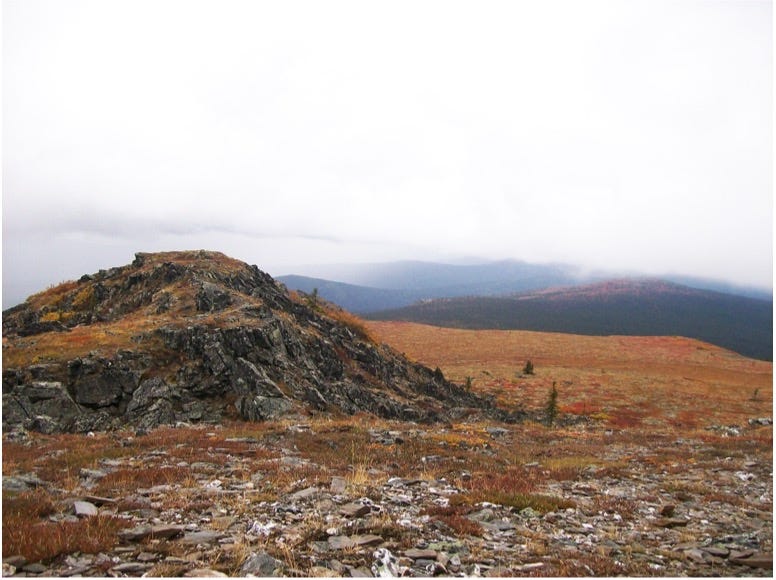
I stood and found some words. “We are here—right here, right now,” I said. “Take a moment, and just take it in. And I invite any of you, if you might wish, to acknowledge this—all of this—in whatever ways that seem right for you.”
Some stepped forward and knelt beside the victim. Some laid their hands, gently, on him. One soaked a bandana in water from his drinking bottle and wiped off the victim’s face. Some knelt with their hands in prayer. Others brushed the mosquitoes and black flies from the victim’s skin and blood. Unspoken, but expressed and felt, each in their own way—“We are here.”
------------
Just being present. This “just,” as a descriptive adverb, arises throughout Zen teachings. Dōgen and his successors have found endless ways of teaching that zazen is just sitting, that Zen is the practice of just being present in the moment as it arises, right here right now. What we are called to do in moments such as the one we experienced at the scene of a fatal helicopter crash above a remote mining facility southeast of Fairbanks, Alaska, at its core, may be just being present and responding to and in the moment—just showing up, just being human.
This just, though, is not the diminishing descriptive we often place on it in our language and our culture. This is an expansive just—an opening, not a closing. This expansive just, this “boundaryless, empty awareness,” as Peter Coyote reflected in a 2025 Zen Peacemakers podcast, opens ourselves to our “deepest, truest nature,” and all that might flow through and from this original self. This just being present, this emptiness, “doesn’t mean nothingness,” Coyote offers. “Emptiness means boundlessness.”
In a spontaneous, authentic engagement in and with the world and those with whom we share it, we often do not have the platitudes that customarily follow the “We are gathered here today” found in many, if not most, more conventional Western religious traditions. In the moments requiring unrehearsed, spontaneous response, the acts of gathering attention and mindfully choosing the words occur before dualities and discrimination, when one does not perceive the mountains walking or not walking. To find the words, or the absence of words, we need to settle in with the attention and mindfulness fostered by authentic practice.
We need to practice this just being present. We need to just sit.
References:
Coyote, Peter. The Three Tenets of Current Affairs. Peacemakers Podcast. Zen Peacemakers. May 29, 2025. https://voice.zenpeacemakers.org/p/the-three-tenets-of-current-affairs.
Bio:
An alumnus of the Zen Peacemakers (ZP) Bearing Witness Native American Retreat program, Peter Pierson worked 20+ years as an advanced life support paramedic in northern Minnesota, North Dakota, northern Arizona, and remote arctic Alaska—and for part of that time also as a Unitarian Universalist lay minister and regional emergency services chaplain.
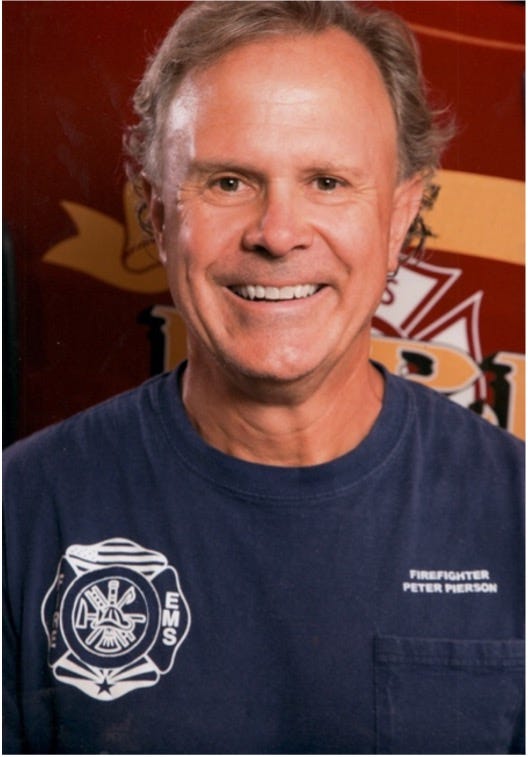
A one-time Minnesota Regional Arts/McKnight Foundation Fellowship recipient, his radio essay work had been produced and broadcast with KAXE/KBXE—Northern (MN) Community Radio and CBC Radio One in Canada. His work has been featured previously in ZPI’s Journal and with Natural History Institute’s Real Ground, Minnesota Historical Society Press’ Voices for the Land, Vertical Jones, The Climbing Art, and other venues. He and his partner now live in the Kansas City area where, as a graduate of the Upaya Zen Center Chaplaincy Training program, serves as a volunteer chaplain in the Kansas State Correctional Facility-Lansing.